

Table of Contents
Introduction
Strands is a modern word puzzle game introduced by The New York Times, quickly becoming a daily ritual for word enthusiasts. Unlike traditional crosswords or word searches, Strands offers a thematic challenge each day, requiring players to uncover a set of related words hidden within a grid of letters. Alongside the puzzle, players receive a guiding clue known as Strands hint today which serves as a vital lifeline when progress stalls. This hint, whether it refers to the thematic clue or the earned in-game helper, is essential for unlocking tricky puzzles. Learning how to interpret and use today’s Strands hint effectively can elevate your solving skills from casual guesswork to precise puzzle mastery.
Strands is particularly unique because of its daily format. Each day’s puzzle brings something new—a fresh theme, fresh challenges, and fresh opportunities to test your ability to connect words in creative ways. This makes “Strands hint today” not just a static feature, but a daily evolving aid that puzzle enthusiasts can lean on as they progress. In this comprehensive guide, we’ll explore how today’s hints work, why they’re crucial, strategies for maximizing their effectiveness, and real-world examples of how they help players crack even the most difficult puzzles.
What Does “Strands Hint Today” Mean?
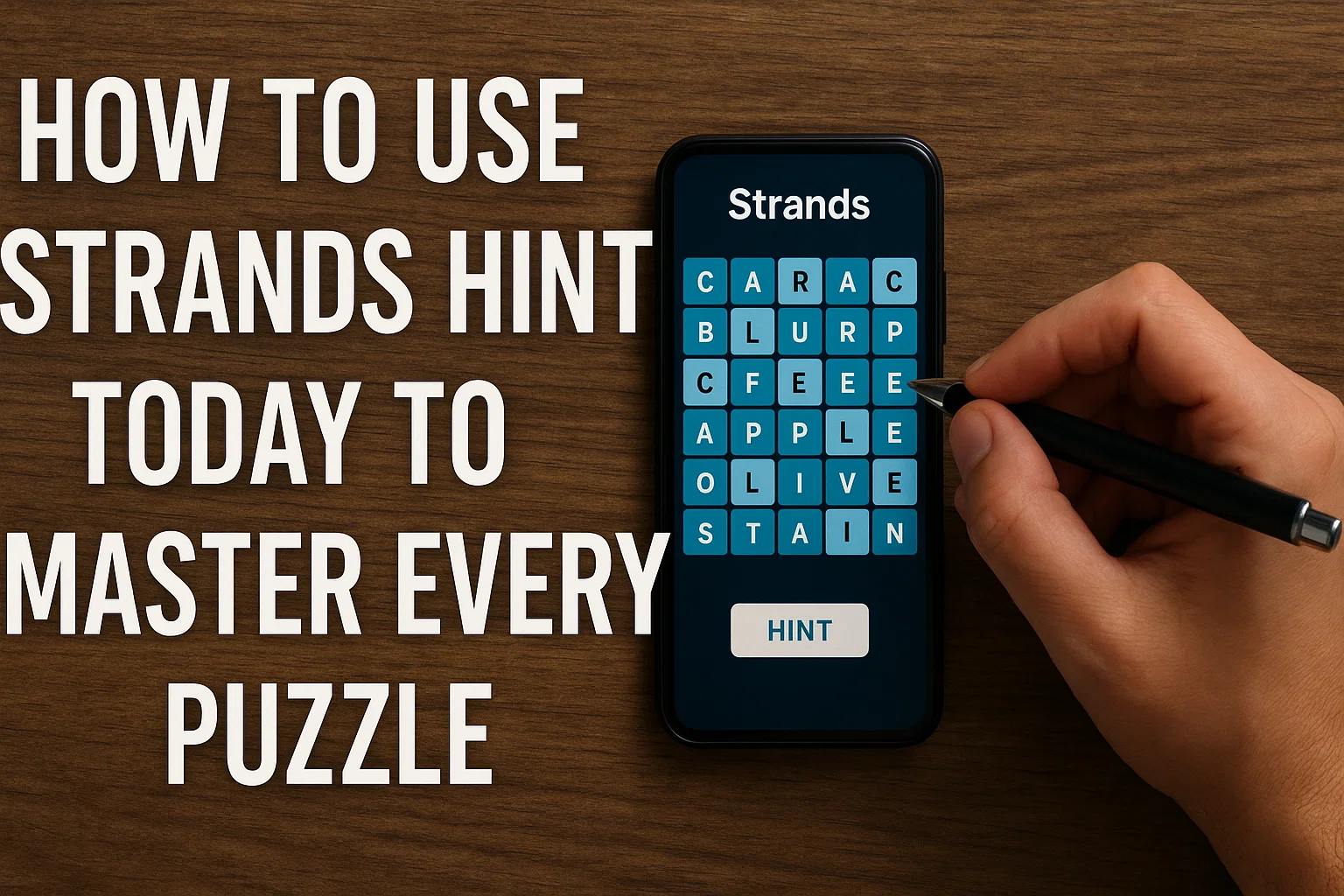
The phrase “Strands hint today” can have two interpretations. First, it refers to the cryptic clue that introduces each daily puzzle. This thematic prompt points toward the category of words hidden within the grid. Second, it refers to the in-game hint system earned by discovering three non-theme words. The latter highlights the letters of one theme word within the puzzle, helping solvers make progress. Understanding both uses of the term allows players to maximize their success. The thematic clue sharpens your focus, while the earned hint provides direct assistance when you need it most.
The thematic clue is often playful, pun-filled, or abstract, making it difficult to decipher at first glance. For example, a theme like “Life on the Vine” could easily mislead you into thinking of grapes or wine when the real answers are tomato varieties. The earned hint system, meanwhile, is much more straightforward—it rewards persistence by guiding you toward a specific word in the grid.
Together, these two interpretations of “Strands hint today” create a multi-layered experience: one that challenges your wit and one that rescues you when frustration creeps in.
Why Today’s Hint Matters
The hints in Strands are not optional extras—they are built into the game’s core design to ensure players can solve puzzles without getting stuck indefinitely. The thematic clue provides a mental framework to guide your search, especially when the theme is obscure or misleading. For instance, a theme titled “On the Vine” might initially confuse players until they realize the answers are all tomato varieties. The earned hint, on the other hand, prevents frustration by revealing the exact letters of a hidden word. When used wisely, today’s hint transforms a stagnant grid into a solvable challenge.
Using “Strands hint today” also builds your confidence as a solver. Without hints, you may hit walls of frustration and abandon puzzles halfway. But with hints, the game becomes more balanced: difficult enough to challenge your thinking, but never so difficult that it feels impossible. For this reason, many puzzle fans see today’s hint as the bridge between casual players and expert solvers. It equalizes the playing field by giving everyone a way forward.
How to Earn and Use the Hint
Using the earned hint in Strands is straightforward but strategic. Here’s how it works:
- Identify non-theme words: Scan the grid for ordinary words that aren’t tied to the theme.
- Unlock the hint: Once you find three such words, the game rewards you with one hint.
- Activate the hint: The hint highlights the letters of a hidden theme word, though you must still connect them to form the solution.
- Build momentum: Solving the hinted word often reveals the puzzle’s structure, making other theme words easier to spot. By cycling between finding non-theme words and deploying hints, you can systematically solve even the toughest puzzles.
One often overlooked benefit of using today’s hint is the “mental reset” it provides. When you are stuck, your brain tends to focus too narrowly on the same incorrect patterns. A hint disrupts this fixation, offering fresh direction and pulling your attention to new possibilities. This small intervention can be enough to reignite your progress.
Strategies for Maximizing “Strands Hint Today”
To get the most out of hints, players should adopt a few proven strategies:
- Start with corners and edges: These areas are less crowded and often yield simple words that help earn hints.
- Look for short, common words: Quick wins add up to hints faster.
- Focus on clusters of unused letters: After solving a few words, clusters often hide additional theme answers.
- Delay hints when possible: Using hints too early can rob you of the challenge. Save them for when you truly feel stuck.
- Revisit the theme clue: Once a few words are revealed, the theme usually becomes much clearer.
You can also combine today’s hint with pattern recognition techniques. For example, if the theme involves types of fruit, and a hint reveals the letters “M _ N G O,” it immediately signals Mango. Over time, you’ll get faster at using partial information from hints to complete the whole picture.
The Connection Between Hints and the Spangram
Each Strands puzzle contains a special word known as the spangram, a longer word or phrase that stretches across the grid and encapsulates the puzzle’s theme. Today’s hint often plays a key role in uncovering the spangram. By revealing theme words, hints narrow down letter placement and highlight potential spangram pathways. For example, in a travel-themed puzzle, solving words like motel and trip makes it easier to spot a spangram like roadtrip. Using hints strategically is one of the best ways to track down this vital centerpiece.
Many players find the spangram to be the most satisfying part of the puzzle because it ties everything together. However, it can also be the most elusive. By revealing letters associated with theme words, hints effectively “light up” parts of the grid that overlap with the spangram. If you want to consistently solve Strands puzzles, learning to connect hints directly to spangram discovery is essential.
Common Mistakes When Using Hints
While hints are powerful, misuse can limit their value. Common mistakes include:
- Overusing hints early: This removes the challenge and learning opportunity.
- Ignoring the thematic clue: The daily clue provides critical context that should not be overlooked.
- Failing to study revealed letters: Simply glancing at the circled letters without considering their arrangement wastes the hint.
- Blocking future paths: Incorrect guesses can complicate the board. Use hints to confirm, not force, your choices.
One of the biggest traps players fall into is thinking hints will solve the puzzle for them. In reality, hints are only part of the process. They give you information, but you must still do the intellectual work of piecing that information into coherent answers. Treating hints as guidance rather than a crutch is the difference between growth and stagnation as a solver.
Player Perspectives on Strands Hints
Community discussions reveal a wide range of player attitudes toward hints. Some pride themselves on never using hints, treating the game as a personal challenge. Others rely heavily on hints to avoid frustration and keep the experience fun. A balanced approach is often best: avoid hints when possible to improve your skills, but don’t hesitate to use them when the puzzle feels impenetrable. After all, hints exist to keep the game engaging and enjoyable.
For some, today’s hint is the difference between finishing the puzzle during a coffee break or giving up entirely. For others, hints are a tool of last resort—used only to keep a streak alive. What unites both camps is the recognition that hints add depth and flexibility to the game. They allow players of different skill levels to engage meaningfully with the same puzzle.
Building Long-Term Skill with Hints
Mastering the use of “Strands hint today” requires practice and reflection. Play consistently to recognize recurring letter patterns and theme structures. After each game, consider how the hint helped you—did it reveal the spangram, or was it more useful for identifying smaller words? Adjust your strategy accordingly. Some days, challenge yourself to complete the puzzle with no hints; on others, use hints early to study how they affect your process. Over time, this balanced approach will sharpen your instincts and problem-solving speed.
To build mastery, it also helps to document your solving journey. Keep a small notebook where you jot down the theme, the words you found without help, and the point at which you used a hint. Over weeks and months, you’ll see clear patterns emerge: certain clue styles that trip you up, specific letter combinations that slow you down, and strategies that consistently lead to breakthroughs. This deliberate practice transforms casual play into intentional growth.
Expanding Beyond Daily Play
While the daily Strands puzzle is the heart of the game, you can extend your learning by revisiting past puzzles. Analyzing how hints worked in previous games provides insight into recurring strategies. Additionally, sharing your solving process with online communities can expose you to alternative approaches. Many experienced players post daily walkthroughs and strategies, demonstrating how today’s hint can be applied in different ways. By observing and practicing, you refine your own toolkit.
Another useful practice is to simulate puzzles outside of the app. Create your own mini grids with friends or challenge yourself with crossword-style prompts. By actively constructing puzzles, you gain a deeper appreciation of how hints guide the solving process. This behind-the-scenes perspective strengthens your ability to decode official puzzles more quickly.
Conclusion
The phrase “Strands hint today” represents a key advantage for puzzle solvers. Whether you interpret it as the daily thematic clue or the earned in-game aid, understanding how to use hints strategically will transform your Strands experience. By unlocking hints through non-theme words, using them judiciously, and combining them with careful observation of the theme, you can confidently master even the most challenging puzzles. Instead of stumbling through guesswork, you’ll develop a structured, efficient approach. Strands is not only about solving words—it’s about enjoying the playful interplay of clues, letters, and discovery. With the smart use of today’s hint, every puzzle becomes an opportunity for mastery.
FAQs
Q1: What exactly is “Strands hint today”?
A: It refers to both the daily thematic clue that introduces each puzzle and the earned in-game hint that highlights letters of a hidden theme word.
Q2: How do I earn a hint in Strands?
A: By finding three non-theme words in the grid, you unlock one hint. This hint circles the letters of a theme word.
Q3: Can I solve Strands without using hints?
A: Yes, many players choose to challenge themselves by avoiding hints entirely, but they exist to help when you get stuck.
Q4: Do hints reveal the full answer?
A: Not exactly. Hints highlight the letters of a theme word, but you must still connect them in the correct order to solve it.
Q5: How does the daily theme relate to hints?
A: The theme provides a conceptual clue, while hints provide direct assistance. Together, they guide you to the puzzle’s full solution.