

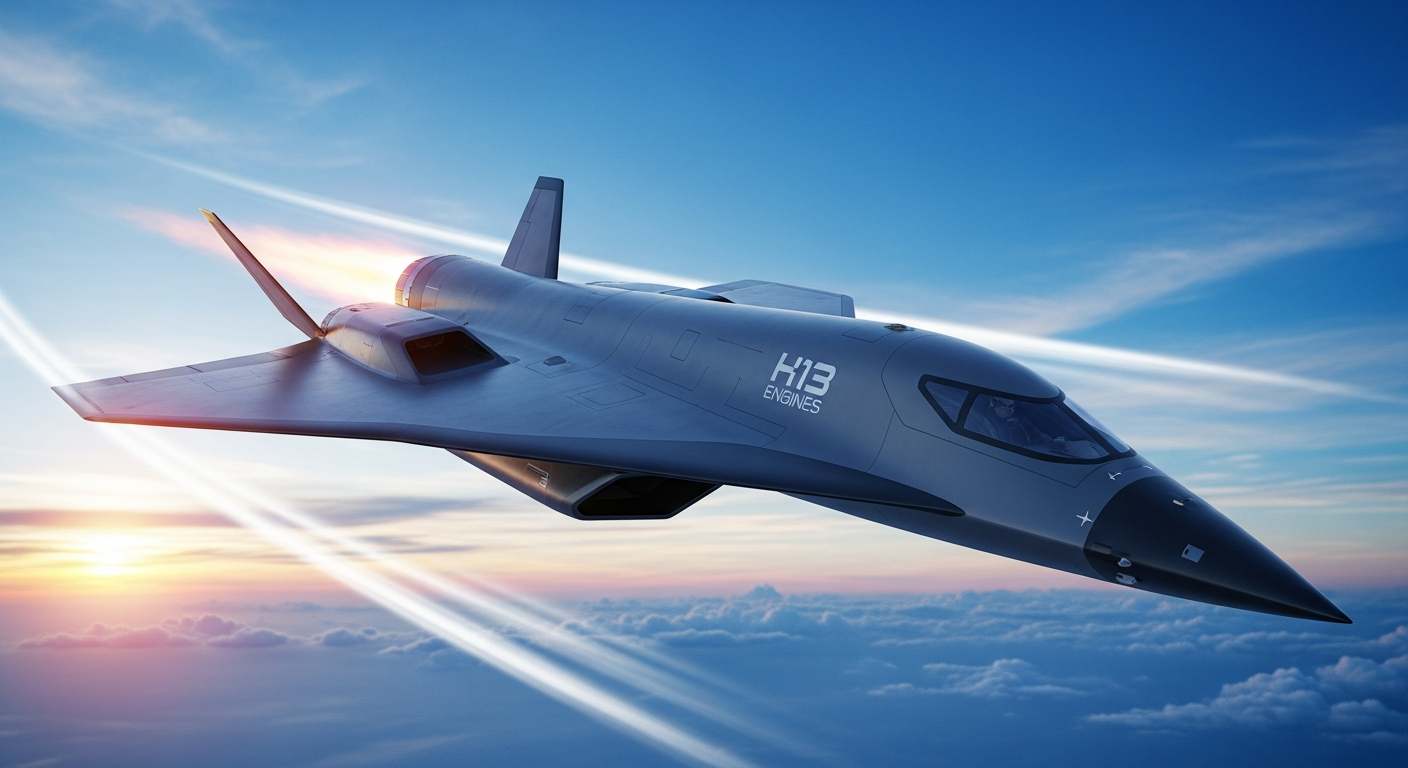
H13 Engines Hypersonic Vehicle Talon-A is changing the way we think about flying. These special engines are made to make vehicles go faster than ever before. With hypersonic speed, Talon-A can travel through the sky at speeds that were once only in science fiction. Scientists and engineers have worked for years to create engines that can handle extreme heat and pressure while keeping the vehicle safe and efficient. The h13 engines hypersonic vehicle talon-a are not just about speed; they are about new technology that can change travel, defense, and exploration. Imagine a plane that can fly from one side of the world to the other in a few hours. That is what Talon-A promises. The engines use advanced materials that can survive high temperatures and push air in a way that traditional engines cannot. This makes hypersonic flight possible, which is faster than sound, faster than missiles, and faster than almost everything in the sky today.
h13 engines hypersonic vehicle talon-a also focus on safety and control. Flying at hypersonic speed is very challenging because the air pressure and heat are extreme. Engineers have added smart systems to help the pilot and the vehicle stay stable. The vehicle design is sleek to reduce drag, and the engines are powerful but efficient. Countries and space agencies are watching Talon-A closely because it represents the next step in high-speed flight. It could change how we travel, explore, and even defend our nations. The technology behind h13 engines hypersonic vehicle talon-a could also help in space travel, making rockets and spacecraft more advanced and reliable.
Understanding H13 Engines Hypersonic Vehicle Talon-A: How It Works
H13 engines hypersonic vehicle Talon-A works by compressing and heating air at incredible speeds to create thrust. The engines use special materials that can survive temperatures of thousands of degrees. Unlike regular jet engines, hypersonic engines do not rely on just spinning turbines; they use air flowing at high speeds to push the vehicle forward. The Talon-A’s design allows it to glide through the atmosphere while keeping control systems active to maintain stability. Scientists have tested these engines in wind tunnels and real flights to ensure they can operate safely at extreme conditions.
The Talon-A’s engines also have cooling systems that prevent overheating. At hypersonic speed, the friction between the air and the vehicle creates heat that can melt ordinary materials. H13 engines are built with advanced ceramics and metal alloys that stay strong even under extreme heat. This allows Talon-A to fly farther, faster, and with more safety than any previous vehicle.
The Technology Behind H13 Engines Hypersonic Vehicle Talon-A
The technology behind h13 engines hypersonic vehicle Talon-A is a combination of advanced engineering, materials science, and aerodynamics. These engines are capable of operating at altitudes where the air is thin, yet provide enough thrust to reach speeds above Mach 5. Engineers have developed smart sensors and computer systems to manage fuel, temperature, and airflow. The body of Talon-A is also designed to reduce drag and heat buildup, ensuring that the vehicle remains stable at high speeds.
H13 engines also use special fuel mixtures that burn efficiently at high speeds. This is different from normal airplane fuel, which cannot handle hypersonic conditions. The combination of fuel, engine design, and materials science makes Talon-A a unique vehicle in aviation history.
Speed and Safety: Talon-A’s Hypersonic Flight Explained
Flying at hypersonic speed is not easy. The faster a vehicle goes, the more heat, pressure, and air resistance it faces. The Talon-A addresses these challenges with smart design and advanced materials. Safety systems monitor every part of the engine and the vehicle. If something goes wrong, the systems can adjust the engine or flight path to prevent accidents.
The vehicle’s shape is also important for safety. Talon-A is sleek and narrow, reducing drag and allowing it to cut through the air with minimal resistance. Engineers have tested every detail to ensure that the vehicle can survive high-speed flight without breaking apart or losing control.
H13 Engines Hypersonic Vehicle Talon-A vs Traditional Aircraft Engines
Traditional aircraft engines rely on turbines and compressors to create thrust. They work well for normal airplanes but cannot survive hypersonic conditions. H13 engines are different because they are designed to handle extreme heat and high speeds. They use advanced materials, smart sensors, and aerodynamic designs to operate safely in environments where normal engines would fail.
Unlike conventional engines, Talon-A’s engines can maintain speed and control at Mach 5 or higher. This makes it possible to travel across continents in hours rather than days. It also opens the door for new military and space applications where speed is critical.
Why H13 Engines Hypersonic Vehicle Talon-A is a Game Changer
The Talon-A is a game changer because it combines speed, safety, and technology in a way that has never been done before. It can travel at hypersonic speeds safely, which was a dream for scientists for decades. Its engines are powerful yet efficient, and its design ensures stability during flight.
H13 engines hypersonic vehicle Talon-A also have the potential to change transportation globally. Imagine flying from New York to Tokyo in a few hours. Or imagine spacecraft that can travel faster and safer using similar technology. Talon-A represents the next step in aviation and aerospace, making the impossible possible.
Talon-A Hypersonic Vehicle: Materials, Design, and Innovation
The design of Talon-A is carefully planned to survive hypersonic conditions. The materials used are advanced alloys and ceramics that do not melt or weaken under high heat. The body is shaped to reduce drag and increase stability. The engines are integrated with sensors and control systems to monitor every aspect of flight. This combination of materials, design, and technology makes Talon-A one of the most advanced vehicles ever created.
Innovation is key to hypersonic flight. Engineers are constantly improving the engines and design to make the vehicle faster, safer, and more reliable. Every part of Talon-A is a product of advanced research and testing.
The Future of Travel with H13 Engines Hypersonic Vehicle Talon-A
With h13 engines hypersonic vehicle Talon-A, the future of travel looks very different. Long flights that take hours or even a day could be reduced to a few hours. Cargo delivery could become much faster, and emergency response teams could reach distant locations quickly. The technology could also influence space travel, helping rockets and spacecraft achieve higher speeds and efficiency.
The Talon-A is not just a plane; it is a vision of the future. Countries and companies investing in hypersonic technology hope to make transportation faster, safer, and more advanced.
Hypersonic Flight Challenges and Solutions in Talon-A
Flying at hypersonic speed brings many challenges. Heat is one of the biggest problems because friction with the air can melt ordinary materials. Talon-A solves this with special alloys, ceramics, and cooling systems. Another challenge is control. At high speeds, even small errors can become dangerous. Talon-A uses sensors, computers, and aerodynamic design to keep the flight smooth and safe.
Fuel efficiency is another challenge. Hypersonic flight requires fuel that burns quickly and efficiently. Talon-A’s engines are designed to optimize fuel use without losing power. These solutions make hypersonic flight possible and safe.
Military and Civil Applications of H13 Engines Hypersonic Vehicle Talon-A
The potential applications of Talon-A are huge. Militaries can use hypersonic vehicles for fast response, surveillance, or defense. Civilian applications include faster passenger flights, emergency transportation, and rapid cargo delivery. The engines and technology can also inspire new spacecraft designs, helping humans explore space more efficiently.
The versatility of Talon-A makes it an important step in both military and civilian aviation. Its technology could change the way people travel, deliver goods, and explore new frontiers.
How H13 Engines Hypersonic Vehicle Talon-A Could Change Space Exploration
H13 engines hypersonic vehicle Talon-A could influence space travel in many ways. Hypersonic technology can help rockets reach orbit faster and more efficiently. It can also improve safety for astronauts by controlling heat and pressure during high-speed travel. The materials and engine design of Talon-A could inspire new spacecraft that travel faster, safer, and more reliably than ever before.
Conclusion
H13 engines hypersonic vehicle Talon-A is more than a plane; it is a revolution in flight technology. Its engines, design, and safety systems allow it to fly faster than anything before while keeping passengers and systems safe. The vehicle represents the future of travel, defense, and space exploration. With Talon-A, what was once impossible is becoming a reality.
FAQs
What is the top speed of Talon-A?
Talon-A can reach hypersonic speeds, meaning it flies faster than five times the speed of sound.
Are h13 engines safe for passengers?
Yes, the engines are built with advanced materials and control systems to ensure safe flight at extreme speeds.
Can Talon-A be used for civilian travel?
Yes, it has potential for fast passenger flights, cargo delivery, and emergency transportation.