

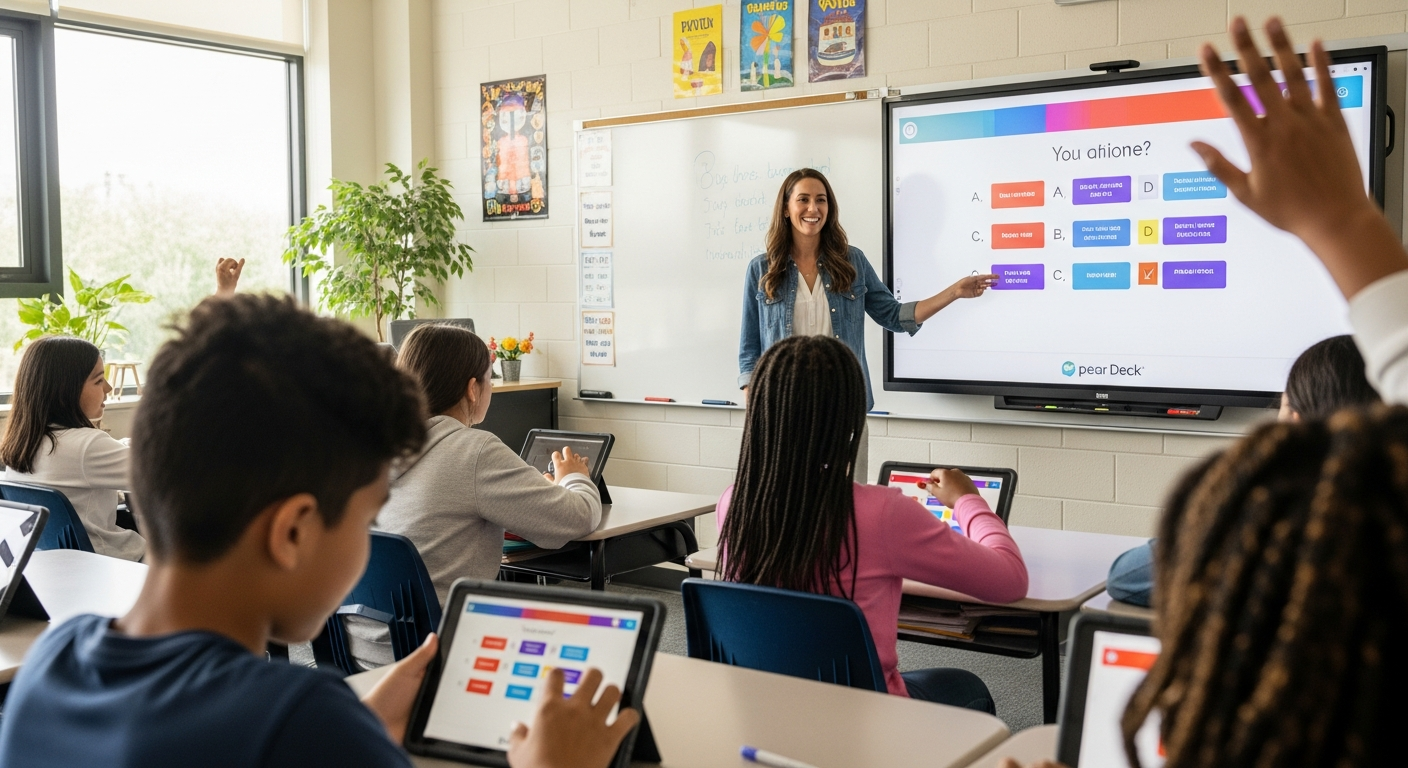
Pear Deck is a powerful tool that makes learning fun and interactive for students. Teachers and students can use pear deck to create live lessons that everyone can join and participate in. With pear deck, lessons are not just about reading or listening; students can answer questions, draw, and even share ideas in real-time. This tool helps teachers see what students understand and what they need more help with. Pear deck works with popular apps like Google Slides and Microsoft PowerPoint, so teachers can easily add interactive questions to their lessons. Students love pear deck because it makes learning exciting and engaging. They can use it to show what they know, work together with friends, and even play learning games.
Teachers can use the feedback from pear deck to improve their lessons and make sure every student is learning. It is perfect for classrooms, online learning, and hybrid setups where some students are at home. Pear deck also offers templates and ready-to-use lessons that save teachers time and make planning easier. By using pear deck, students become more involved in their learning, and teachers can see real-time results that help them guide the class better. It helps build a positive learning environment where students feel included and motivated. Pear deck is not just a tool; it is a way to transform the classroom into a place where learning is fun, interactive, and effective. It supports different subjects like math, science, reading, and history, so it works for all kinds of lessons.
Benefits of Using Pear Deck
Pear deck offers many benefits for both students and teachers. First, it makes learning fun. Students enjoy interactive lessons more than traditional ones. They feel excited to answer questions, participate in activities, and share their ideas. Second, pear deck helps teachers understand how students are doing. Teachers can see real-time answers and adjust their teaching if needed. Third, pear deck supports different learning styles. Visual learners, auditory learners, and kinesthetic learners all benefit from its interactive features. Fourth, pear deck encourages collaboration. Students can work together on questions or share their ideas with the class. This builds communication and teamwork skills. Fifth, pear deck saves teachers time. Ready-made templates and lessons allow teachers to create activities quickly without starting from scratch.
Another benefit is that pear deck supports remote learning. Students at home can join lessons from any device, and teachers can still engage with them as if they were in the classroom. Pear deck also improves student confidence. When students answer questions and participate, they practice critical thinking and expressing ideas clearly. Teachers can give instant feedback, which helps students understand their mistakes and learn better. Pear deck also builds a positive learning environment. Students feel included, motivated, and encouraged to participate. Overall, pear deck transforms traditional lessons into interactive experiences that make learning more enjoyable and effective.
How to Create a Pear Deck Lesson
Creating a lesson with pear deck is simple. First, teachers choose their platform, such as Google Slides or PowerPoint. Then, they add interactive questions, polls, or drawing slides. Pear deck provides templates that save time and help teachers create engaging lessons quickly. Teachers can add multiple-choice questions, short answers, or reflective questions to make students think deeply. After the lesson is ready, teachers share a code with students. Students join using the code on their devices and start participating. Teachers can monitor responses in real-time, which helps them guide the lesson. They can also review student answers after class to understand who needs more help. Pear deck allows teachers to adjust lessons for different student needs, making learning personalized and effective.
Teachers can also make lessons more engaging by including games, challenges, or interactive activities. For example, they can ask students to draw their ideas or answer questions in teams. Pear deck provides tools to make lessons creative, fun, and meaningful. Teachers can check learning throughout the lesson and not just at the end. This ensures that students understand each topic before moving forward. Pear deck also allows teachers to include multimedia, like images, videos, or links, to make lessons more dynamic. Using pear deck regularly helps teachers build a routine that students enjoy and look forward to.
Pear Deck Activities for Students
Pear deck allows many types of activities to keep students engaged. One activity is polls. Teachers can ask a question, and students vote for their answer. This is fun and gives teachers instant feedback. Another activity is short-answer questions. Students can type their answers, which helps teachers see who understands the lesson. Drawing slides let students show ideas visually. They can draw diagrams, shapes, or concepts they learned. Pear deck also allows teachers to add reflection questions at the end of the lesson. Students can write what they learned, what was difficult, or what they enjoyed. This encourages thinking and self-assessment.
Teachers can also create games using pear deck. For example, they can ask students to solve math problems or answer quiz questions as a team. Students love the challenge and competition. Collaboration activities are also possible. Students can work together to answer questions, share ideas, or solve problems. Pear deck allows teachers to make lessons interactive for every student, regardless of their age or skill level. Students who learn better visually, auditorily, or through doing, all benefit from the different types of activities pear deck provides.
Tips for Using Pear Deck Effectively
To use pear deck effectively, teachers should plan lessons ahead of time. They should decide what questions or activities to include and how to make lessons interactive. Teachers should also encourage participation from all students. They can use anonymous responses to help shy students share their ideas. Reviewing student answers after class is important to understand who may need extra help. Teachers can also customize lessons to match their teaching style and students’ needs. Using different types of activities, like polls, drawings, and quizzes, keeps lessons interesting. Teachers should also explore pear deck templates and ready-made lessons to save time and make lessons more engaging.
Another tip is to use pear deck for formative assessments. Teachers can check understanding during lessons, not just at the end. This helps students learn better and teachers guide the class more effectively. Teachers can also combine pear deck with other tools and apps to make lessons more dynamic. Including multimedia, videos, or links in lessons makes learning fun and meaningful. Finally, teachers should regularly use pear deck to build a routine that students enjoy. Students become more engaged, motivated, and confident in their learning when they know lessons will be interactive and fun.
Pear Deck for Remote Learning
Pear deck works well for online or hybrid learning. Students at home can join lessons using any device and participate in real-time. Teachers can interact with remote students as easily as with students in the classroom. Pear deck keeps remote learning engaging, which is important because students can lose focus when learning online. Teachers can create interactive slides, polls, and activities that students can do from home. They can see responses instantly and guide lessons based on student understanding. Remote students can also answer questions anonymously, which encourages participation. Pear deck makes remote learning active and fun, instead of just watching a video or reading slides.
Pear deck also supports collaboration in remote learning. Students can work together on questions or share answers with the class. Teachers can monitor learning and give instant feedback. This ensures that all students, whether in the classroom or at home, are included and supported. Using pear deck for remote learning helps students stay connected, engaged, and motivated while learning online. It makes virtual classrooms more interactive and effective.
Pear Deck Templates and Resources
Pear deck provides many templates and resources for teachers. These templates save time and help teachers create lessons quickly. Teachers can choose templates for different subjects, grades, or lesson types. Templates can include polls, multiple-choice questions, drawing activities, and reflection questions. Teachers can also modify templates to fit their lesson goals. Pear deck resources include ready-made lessons, professional development tips, and guides for using the tool effectively. These resources help teachers improve their teaching and create engaging lessons for students. Templates also allow teachers to experiment with new types of activities without spending too much time planning. Using pear deck resources makes teaching easier, faster, and more effective.
Teachers can also find ideas from other educators who use pear deck. Sharing lessons, tips, and strategies helps teachers learn new ways to make lessons interactive. Pear deck resources encourage creativity and help teachers provide better learning experiences for students. Students benefit from well-designed lessons that are fun, engaging, and meaningful.
Conclusion
Pear deck is a powerful tool that transforms learning into a fun and interactive experience. It allows teachers to create lessons that engage students, support collaboration, and provide instant feedback. Pear deck works for all subjects, supports remote learning, and helps students learn better while enjoying the process. Teachers can use templates, activities, and multimedia to make lessons dynamic and meaningful. By using pear deck, classrooms become interactive spaces where students participate actively and teachers can guide learning effectively. Pear deck is easy to use, saves time, and makes teaching enjoyable. It is suitable for all ages and learning styles, making it a must-have tool for modern classrooms.
FAQs
What is pear deck?
Pear deck is an interactive learning tool that helps teachers create engaging lessons where students can answer questions, draw, and participate in real-time.
How do I use pear deck?
Teachers create lessons using Google Slides or PowerPoint, add interactive activities, and share a code with students to join. Students participate on their devices.
Can pear deck be used for remote learning?
Yes, students can join lessons online, answer questions, and participate in activities from any device, making remote learning interactive.