
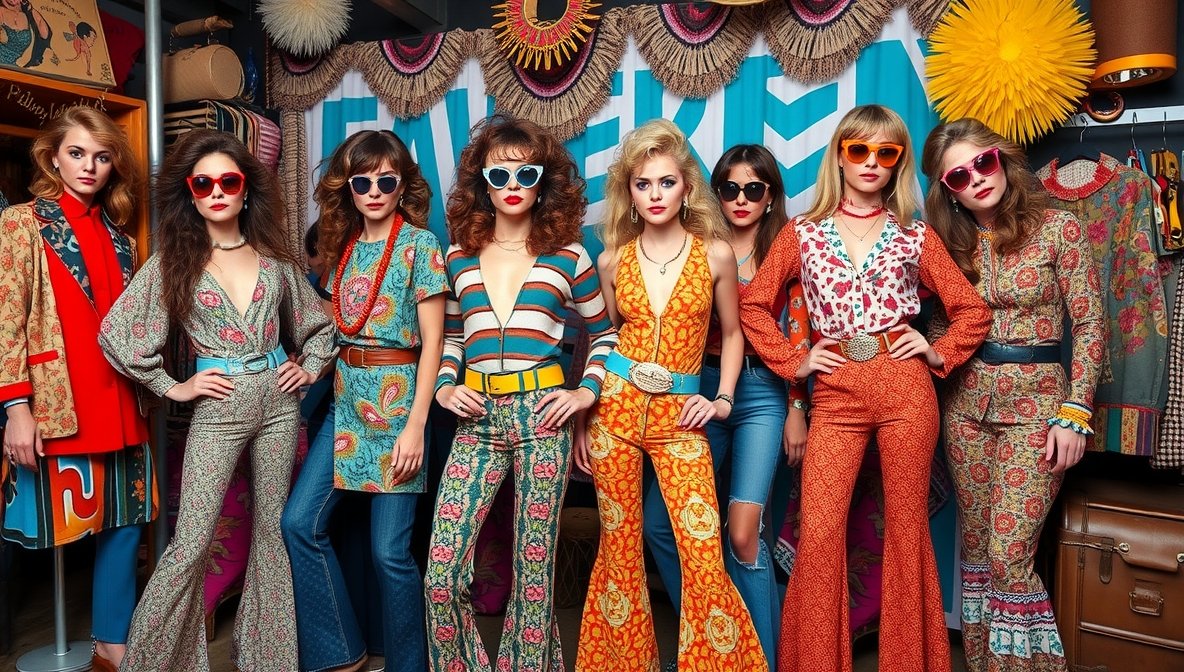
70s Fashion is all about bold colors, flared pants, and groovy patterns that made the decade unforgettable. 70s fashion is a perfect mix of freedom, creativity, and self-expression that still inspires people today. From disco vibes to bohemian looks, the 1970s gave us outfits that were fun, unique, and full of personality. This fashion era was not just about clothing; it was about making a statement. People wore wide collars, bell-bottom jeans, jumpsuits, and platform shoes that turned heads everywhere.
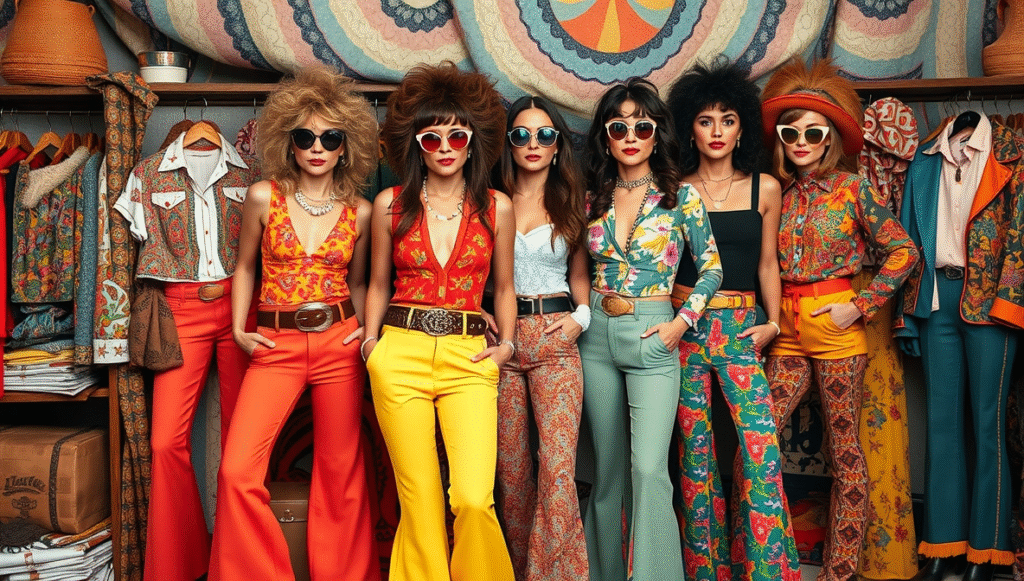
Bright colors like orange, yellow, and green were popular, while patterns like paisley, floral, and stripes brought life to every outfit. Accessories were a must in 70s fashion. Big sunglasses, chunky jewelry, wide belts, and scarves completed the look. Hairstyles also played a big role in 70s fashion. People loved long straight hair, feathered styles, afros, and shag cuts. Makeup was bold too, with bright eyeshadows, thick eyeliner, and glossy lips making everyone feel glamorous. Music and pop culture heavily influenced 70s fashion. Disco fever made sparkly dresses and shiny fabrics a trend.
Popular Clothing in 70s Fashion
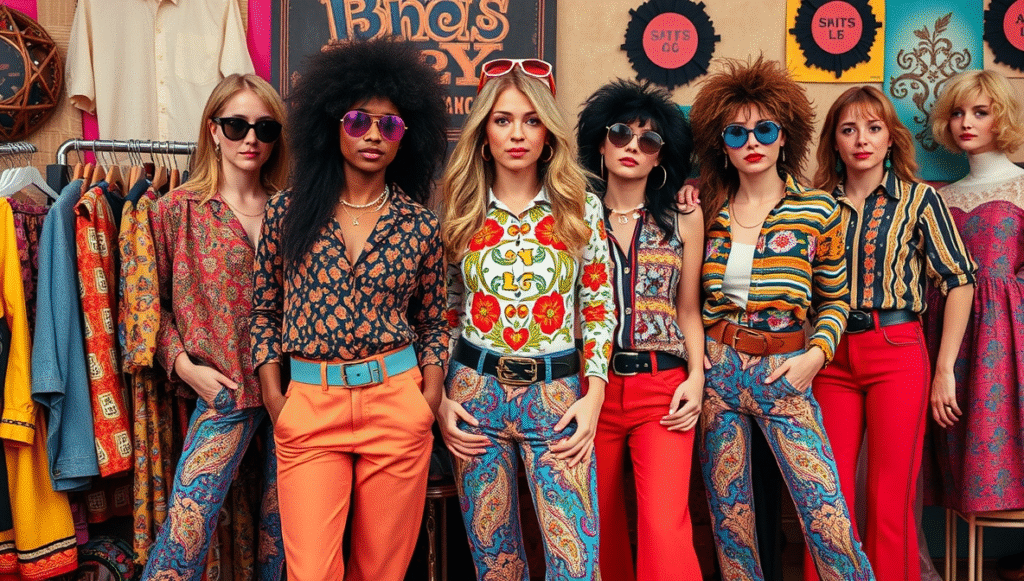
Flared pants and bell-bottom jeans were the stars of 70s fashion. They were worn by men and women and paired with fitted tops, tunics, or turtlenecks. Jumpsuits were also a big trend, especially for women, often made from polyester or denim. Shirts with wide collars, vests, and tailored jackets added a stylish touch. Mini skirts and maxi skirts gave women options to show their style, while dresses were often flowy with floral prints or bright geometric patterns. Leather jackets and suede coats gave a cool, rock-inspired look.
70s Fashion Accessories
Accessories made 70s fashion complete. Wide belts highlighted the waist, while scarves could be tied around the neck or head. Big sunglasses were essential, giving a glamorous look. Jewelry was chunky and bold, including long necklaces, big earrings, and stacked bracelets. Hats like fedoras, berets, and floppy hats were also popular. Shoes were statement pieces, with platform shoes, clogs, and boots taking the spotlight. Sneakers and sandals were also worn casually, showing the mix of comfort and style in 70s fashion.
Hairstyles and Makeup in 70s Fashion
Hairstyles were important in 70s fashion. Long straight hair, feathered cuts, and afros were very trendy. Men often had long hair or shaggy styles, while women experimented with volume and waves. Makeup was colorful and bold, with bright eyeshadows, thick eyeliner, and glossy lips. Disco looks added sparkle with glittery eyeshadow and high-shine lip gloss. Both hairstyles and makeup reflected the playful and confident spirit of the decade.
Disco Style in 70s Fashion
Disco was a major influence in 70s fashion. Nightclubs and parties demanded glamour. Shiny fabrics, sequins, metallic dresses, and jumpsuits were worn to stand out. Platform shoes made dancing more fun and stylish. Bold colors and tight-fitting outfits reflected confidence and energy. Disco fashion was also about experimenting, mixing fabrics, textures, and prints to create a unique and eye-catching look.
Hippie and Boho Styles in 70s Fashion
Early 70s fashion was influenced by the hippie movement. Bohemian style included tie-dye shirts, flowing skirts, bell-bottoms, and handmade accessories. Natural fabrics like cotton, linen, and wool were preferred. Peace symbols, beads, and fringes added a personal touch. This style promoted comfort, individuality, and a connection with nature. Boho and hippie fashion encouraged mixing patterns and textures, creating a relaxed yet artistic look that is still popular today.
Rock and Punk Influences in 70s Fashion
Rock and punk music brought edgy styles to 70s fashion. Leather jackets, ripped jeans, band t-shirts, and studs were common. Punk style added rebellion and attitude to clothing. Black, red, and metallic shades were often used. Hairstyles became more daring, with spiked hair or bright-colored hair expressing individuality. These styles influenced street fashion and showed that 70s fashion was not limited to one type of clothing.
Colors and Patterns in 70s Fashion
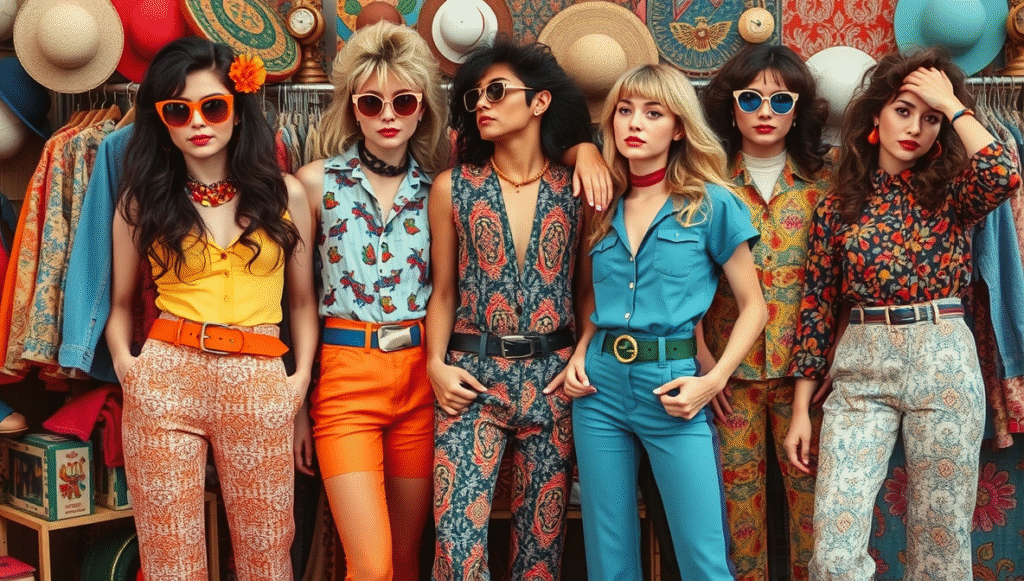
Colors in 70s fashion were bright and fun. Orange, yellow, brown, green, and red were popular. Patterns included paisley, floral, stripes, plaids, and geometric designs. People were not afraid to mix prints or wear bold color combinations. This showed confidence and creativity, and made fashion exciting. Bright colors and patterns could be used in tops, skirts, pants, or accessories, making every outfit unique.
Fabrics and Materials in 70s Fashion
Polyester, denim, corduroy, and velvet were widely used. Shiny fabrics like satin and lamé added glamour, while cotton and linen were comfortable for casual wear. Leather and suede were used for jackets, shoes, and accessories. Mixing different fabrics in one outfit created a stylish and interesting look. Fabrics were also chosen based on the style—disco fashion used shiny materials, while hippie fashion preferred natural and breathable fabrics.
How to Wear 70s Fashion Today
70s fashion is easy to mix with modern clothing. Flared jeans, platform shoes, and vintage tops can be paired with contemporary jackets or sneakers. Accessories like scarves, chunky jewelry, and hats can complete the look. Bright colors and prints can be added carefully without overdoing it. 70s fashion is about confidence, creativity, and fun, so people can experiment and find what works for them. Vintage stores and thrift shops are great places to find original 70s pieces.
Celebrities and 70s Fashion Influence
Many celebrities today wear 70s-inspired clothing. Red carpet events and fashion shows often feature flared pants, metallic fabrics, and colorful prints. Social media influencers recreate 70s looks, making it easy to find ideas online. Celebrities help keep 70s fashion alive by showing how to mix retro styles with modern trends. This influence proves that 70s fashion never goes out of style.
70s Fashion for Men and Women
Men’s 70s fashion included bell-bottoms, wide-collared shirts, vests, leather jackets, and platform shoes. Hairstyles were long or shaggy, and accessories included hats, scarves, and big sunglasses. Women’s 70s fashion had flared pants, jumpsuits, maxi skirts, mini skirts, and disco dresses. Bold makeup, feathered hair, and chunky jewelry completed their look. Both men and women enjoyed experimenting with colors, fabrics, and patterns to express themselves.
Vintage Shopping and 70s Fashion
Thrift stores and vintage shops are perfect for finding 70s fashion pieces. Original clothes, accessories, and shoes give an authentic retro look. People can mix old and new items to create a modern 70s-inspired outfit. Shopping for vintage 70s fashion is fun, creative, and sustainable. It helps people bring back the style of the decade while showing personality.
Why 70s Fashion is Timeless
70s fashion is timeless because it celebrates freedom, creativity, and individuality. Its influence can be seen in modern clothing, runway shows, and everyday outfits. Mixing patterns, bold colors, and unique accessories makes fashion exciting. People enjoy 70s fashion because it allows them to express themselves confidently and playfully.
Conclusion
70s fashion is more than just retro clothes. It is a celebration of self-expression, creativity, and culture. From hippie styles to disco glamour, it offers something for everyone. Mixing bright colors, patterns, and bold accessories brings fun and personality to modern wardrobes. Vintage stores, celebrities, and social media keep 70s fashion alive today. Embracing 70s fashion allows anyone to be stylish, confident, and unique.
FAQs
Q1: What are the main trends in 70s fashion?
A1: Main trends include flared pants, bell-bottoms, jumpsuits, mini and maxi skirts, disco dresses, bold patterns, bright colors, platform shoes, wide collars, and chunky accessories.
Q2: Can I wear 70s fashion today?
A2: Yes! Flared jeans, vintage tops, platform shoes, and bold accessories can be mixed with modern clothing to create a 70s-inspired look.
Q3: What colors were popular in 70s fashion?
A3: Bright colors like orange, yellow, green, brown, and red were popular. Mixing prints and colors was common.